





Lithium batteries and safety: the essential role of the manufacturer
31 August 2022
We are living in the decade of the energy transition, marked by the unprecedented development of new electrification technologies, starting with lithium batteries, a key component in the gradual shift away from polluting fossil sources towards low-impact, green mobility. And while today all eyes are on batteries, it’s well known that the spread of generalisations, inaccurate beliefs and common misconceptions is always just around the corner, often generating fears and concerns in public opinion. One of these relates to the risk of fire. Indeed, today it is commonly (but imprecisely) held that lithium batteries are easily flammable. Browsing the web, it’s easy to find shocking news and images of lithium batteries catching fire and causing damage to property or people, but it’s important not to lump everything together, and above all to promote accurate, correct information.
In fact, the manufacturer plays a crucial role in ensuring battery safety: work on this aspect starts as early as the research and development phase, then moves on to design, which must comply with specific criteria, through to the selection of the most suitable materials and the actual assembly of the battery pack.
However, many companies have entered the battery market with insufficient knowledge and experience, contributing to a negative perception of lithium batteries. If the pack is designed in a superficial manner, if an unsafe chemistry or one unsuitable for the application in question is employed, if inefficient electronics are adopted and if assembly is not performed with due care, the risk of fire can become real. It is therefore important to choose experienced battery manufacturers, who carry out specific technical tests and carefully select the components and electronics starting right from the research and development phase.
Let’s take a closer look at the characteristics that make a lithium battery safe.

Today, in the electrification market, the main challenge is between two principal lithium-based chemistries: NMC (Nickel, Manganese, Cobalt), the most widely used in automotive, and LFP (Lithium Iron Phosphate), more commonly used in the industrial vehicle segment. Unlike many industrial applications, cars place relatively limited stress on the battery and instead require fast charging and high energy density. In contrast, in the industrial world, where work cycles are often intensive and extend over many consecutive hours, the primary requirements are long battery life and safety. For this reason, LFP chemistry is the best choice and, if properly managed, is less prone to thermal runaway phenomena

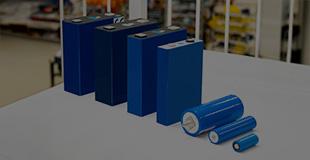
If small-format cells are used to assemble a battery pack, a very high number of cells in parallel will be required. As a practical example, consider a 400 Ah lithium battery. If it were composed of cylindrical 3 Ah cells, 130 cells in parallel would be required. If on the other hand prismatic 50 Ah cells were used to build the same battery, only 8 cells in parallel would be needed to reach the desired capacity. Clearly, if one of these cells were to short circuit, in the first case it would have to absorb energy up to 130 times its capacity, whereas in the second case only 8 times. Flash Battery batteries are built with a maximum of 4 cells in parallel, an assembly methodology that, following extensive testing and studies, has been validated as the best solution to guarantee maximum safety in all conditions

Battery control electronics

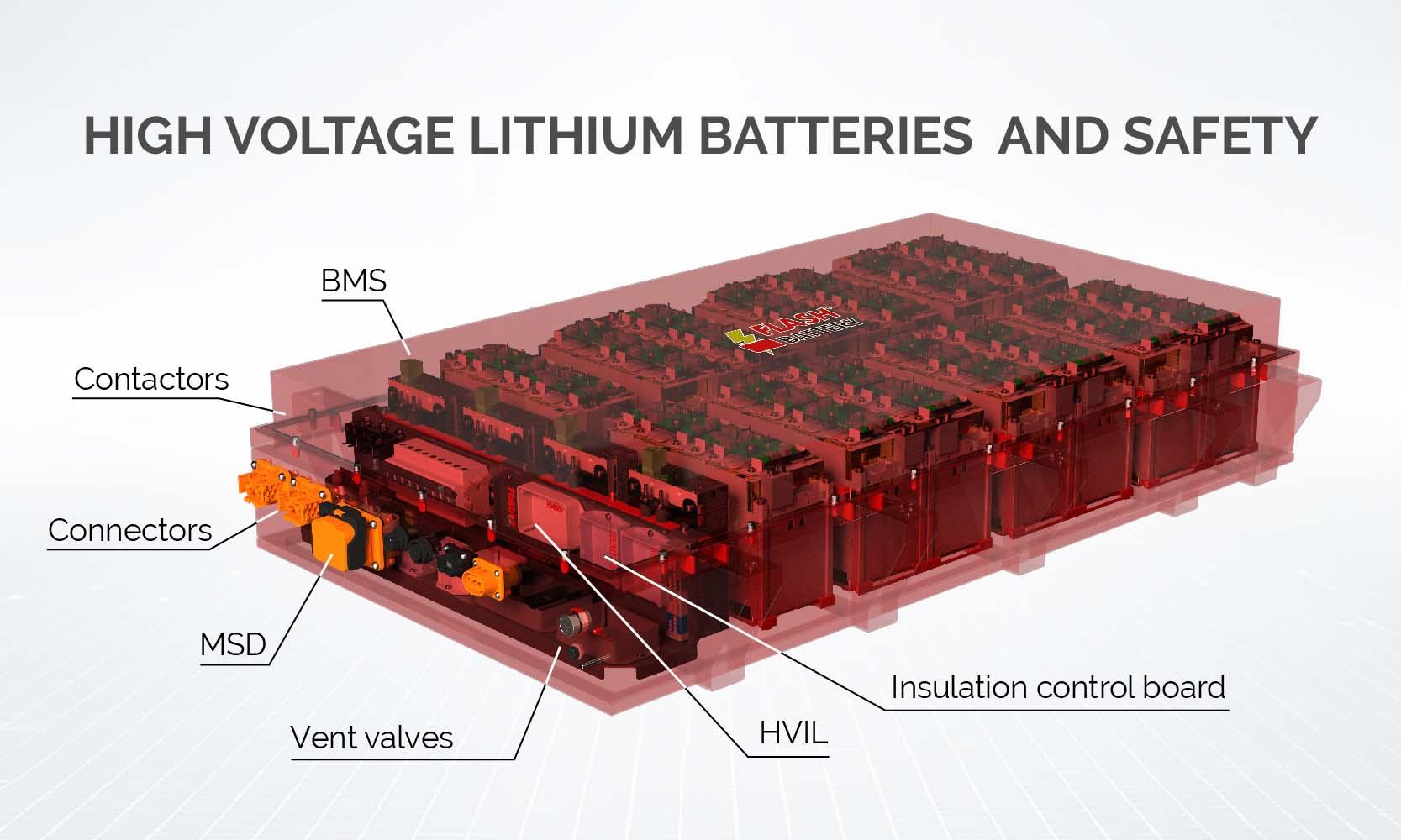
Another key to creating a safe lithium battery is the development of its Battery Management System. An intelligent BMS allows optimal use of the selected chemistry and ensures not only safety, but also long-term performance and reliability.
What is the main purpose of the BMS and control electronics?
Primarily to keep cells balanced, monitor all battery parameters in real time, communicate with the vehicle and control the charger. When carefully designed, a high-quality BMS also ensures stable performance over time by carrying out self-diagnostics and predictive maintenance, providing full control of the entire lithium battery pack.
Effective control electronics prevent overheating
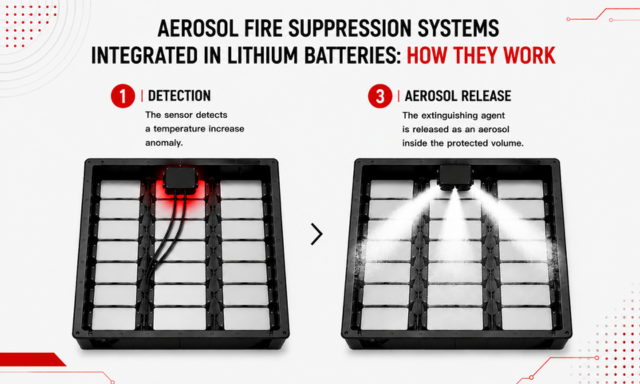
Overheating is one of the main issues to prevent to ensure the safety of a lithium battery, and to achieve this constant monitoring of the battery’s internal temperature becomes essential. One of the various functions of an intelligent BMS is precisely this: ensuring the constant checking of the temperature and the voltage of individual cells, to interact with the vehicle and with the battery charger in order to stop it from charging and discharging in the event of a critical issue and to trip the main contactors.
However, good monitoring alone is not always sufficient. It must be done in the right places and in an efficient manner. What often makes the difference in terms of safety is how the control electronics actually operate. Working on electronics to improve them has been one of Flash Battery’s primary objectives since its founding in 2012, when the potential of the first lithium batteries from Asia was limited by major electronic issues that reduced long-term safety and reliability. From the outset Flash Battery focused precisely on electronics, developing a unique, proprietary remote monitoring software solution that offers numerous advantages: The Flash Data Center
Flash Data Center 4.0 among the finalists of the Bauma Innovation Award 2022
The Flash Data Center was created with the aim of providing daily monitoring of the exact usage of every individual Flash Battery lithium battery installed worldwide, and its most important feature is the automatic control of data. Thanks to software developed in-house, battery operation data is analysed 24/7, and any warnings or alerts of misuse are simultaneously sent both to the customer and to the Flash Battery Service Department in order to prevent potential failures or anomalies, ensuring self-diagnostics and predictive maintenance.
Even in its first version, this software – now patented in Italy and awaiting international patent approval – enabled the precise analysis of how industrial machines and vehicles equipped with Flash Battery batteries are used, making it possible to identify actual charging and discharging times, days of use, average consumption and temperatures reached, thereby improving vehicle operating efficiency. Its latest 4.0 version adds even more value.
The Flash Data Center 4.0 cloud is integrated in a virtual environment with a containerised architecture that leverages artificial intelligence and ensures the interconnection of all battery systems produced by Flash Battery, supported by advanced machine learning technologies. This system (for which a new streamlined and intuitive graphical interface has also been developed to improve the user experience) enables advanced and predictive real-time analysis of big data from battery systems. These innovative features have led it to be shortlisted among the finalists of the prestigious Bauma Innovation Award 2022.
Safety tests
These are tests carried out in laboratories and under controlled safety conditions, where the batteries are stressed until they reach their declared operating limits or even exceed their usage range. This ensures that the minimum level of safety is guaranteed even under extreme conditions, while protecting both the carrier and the end user.
UN 38.3 tests

One of the best-known standard tests is the UN 38.3 test group (the procedures of which are set out in the international Manual of Tests and Criteria), consisting of eight different types of tests that simulate the possible conditions under which a battery must prove to be safe (thermal, vibration, altitude, shock, impact, overcharge tests, etc.).
Passing these tests is an essential requirement for the global transport of lithium batteries, whether by road, sea or air.
Nail penetration test
Another important example of a safety test carried out to simulate the worst-case scenario for a lithium battery – namely an internal short circuit within the cells – is the nail penetration test. This test essentially involves penetrating the battery with a nail to simulate a short circuit and verify that the battery does not catch fire or explode.
Clearly, the likelihood of a cell being perforated in real-world conditions and under standard battery use is virtually nil. However, this is an extremely important test because it simulates a short circuit, a problem that can genuinely arise in the event of misuse or manufacturing defects.
Performance tests
To objectively measure the performance and nominal specifications of lithium batteries and compare them with other batteries of the same type available on the market, performance tests are carried out. These tests are now widely used as lithium batteries are increasingly being adopted in a variety of sectors of the economy, from mobile applications to automotive and industrial machinery and vehicles.
As a result, a growing number of European countries are making significant investments in the sector, driven by urgent green regulations. This has also led to the exponential growth of medium- to large-scale battery testing laboratories, which now provide comprehensive, accurate and specialised services.
Can safety and customisation go hand in hand?
Flash Battery designs and manufactures lithium batteries entirely customizzate according to customer requirements, the sector of use and the specific application to be electrified. But does a customised battery necessarily mean reduced safety? Not at all! In fact, working on tailored designs means guaranteeing extremely high quality standards, which clearly also translate into high levels of safety.
Every battery produced by Flash Battery follows precise customisation processes, and for each of its characteristics – whether mechanical, electronic or electrical – a dedicated internal design guideline is developed. This enables us to meet the minimum safety requirements for every new project we undertake.

Our design solutions are then developed using standardised functional base elements, integrated according to the specific requirements of the battery and its operating context. Moreover, all processes and workflows are tested internally by our R&D department or, where necessary, by external laboratories before being validated and standardised. This allows us to guarantee our customers the reliability and professionalism that set us apart.
Choosing a lithium-battery manufacturer with experience and the right know-how is therefore critical to ensuring the safety of industrial machines. Behind the voltage, ampere-hours and dimensions of a battery lies a truly complex world of study, research and development, technical testing and above all careful selection of components and electronics, factors that – besides influencing the performance of the application – are essential to ensuring a lithium battery is safe and reliable over time.