






Lithium battery transport: all you need to know
20 December 2025

The transport of lithium batteries is today one of the most relevant topics in industrial logistics. The growing adoption of electric vehicles, electrified industrial machinery, and energy storage systems has led to a significant increase in the demand for lithium batteries.
This development has made it necessary to introduce specific regulations for lithium battery transport, with the aim of ensuring safety throughout the entire logistics chain.
Also part of this phenomenon is the industrial electrification sector, which, driven by increasingly pressing international sustainability policies and the considerable benefits of the energy transition, is experiencing a particularly prolific period.
In recent years, the word “electrification” has most been often associated with lithium batteries.
While they initially involved computers and small tooling applications, lithium batteries have gradually evolved towards the electrification of hybrid or full-electric vehicles and today more and more manufacturers of industrial machines and electric vehicles are turning to this technology for the electric transition of their fleets and/or plants.
The sharp increase in demand has resulted in the need to “secure the arrival” of these products to global markets, which has led to an impressive increase in flows, thus necessitating the introduction of legislation and regulations to manage lithium battery transport more effectively.
However, when it comes to lithium batteries, the subject of safety attracts the attention of users and is an issue that affects all stages of the supply chain, transport included.
Nowadays, different lithium-based chemistries are available on the market, each with its own particularities and characteristics, making them more or less suitable for any given application. Chemistry is not the only determining element when it comes to defining the correct performance of a lithium battery: such performance also derives from another important element – the Battery Management System (BMS).
Indeed, a BMS is capable of making the most of the characteristics of the chosen chemistry, ensuring reliability and equal performance over time by managing and controlling all the devices that revolve around the battery.
C-Rate, thermal stability and specific energy are some of the characteristics related to the thermal risk of batteries, or to chemical, electrical and kinetic risks.
Since 2007, with the release of Revision 15 of the UN Model Regulations, lithium batteries have been officially included in the list of dangerous goods for transport under UN code 3480, and the first requirements for their safe transport were established.
For these reasons, lithium batteries are classified as dangerous goods, in the same manner as chemicals or flammable goods. Like any other material, they can be transported in all modes, such as by road, sea, rail or air.
Like other materials, they can be transported by all available modes: road, sea, rail, and air. Dangerous goods are subject to specific regulations concerning transport, workplace safety, storage, consumer protection, and environmental protection, with the goal of preventing accidents involving people, property, the environment, or transport vehicles.To ensure consistency across these regulatory systems, the United Nations has developed harmonized mechanisms for hazard classification criteria, communication tools, and transport conditions across all shipping modes.
Nevertheless, as they are part of the list of dangerous goods, their transport is subject to specific regulations to ensure their proper handling and protection throughout the haulage and storage phase, in order to avoid unpleasant situations, such as fires. It is precisely for this reason that they are classified as “dangerous goods” and that their handling, both domestically and internationally, is subject to special European regulations, as well as to a special type of packaging for shipment.
What are the “rules” to be followed and how can lithium batteries be transported safely?
Model Regulations and the Role of UNECE
UNECE manages regional agreements to effectively implement these mechanisms for the transport of dangerous goods by road, rail, and inland waterways.
The current version of the Model Regulations in force is Rev. 24 (2025) while the first edition of the UN Recommendations dates back to 1956.
The document is updated every two years and contains a structured set of technical and procedural rules that define:
-
the classification of dangerous goods
-
the Dangerous Goods List
-
requirements for packaging, containers, and tanks
-
shipping procedures, documentation, marking, labeling, and placarding
-
safety requirements, prevention measures, emergency response, and compliance checks
These recommendations are designed to be universal and applicable to all transport modes: road, rail, sea, air, and inland waterways.
UN 38.3 certification for lithium batteries

UN 38.3 certification verifies that batteries are suitable for any type of transport and confirms that they have successfully passed all required safety tests.
Lithium batteries must undergo eight different tests carried out by an approved independent laboratory to ensure the safety of cells and battery packs during transport.
The tests required by UN 38.3 consist of:
- Altitude simulation test
The test simulates an unpressurised aircraft area at an altitude of 15,000 metres. The battery is subjected to a pressure of 11.6 kPa for more than 6 hours, after which certain criteria of mass loss, no leakage, no venting, no disassembly, no rupture and no fire, and voltage retention of not less than 90% must be met.
- Thermal test
The battery is stored for 6 hours at +72° C, followed by 6 hours at -40° C for a total of 10 cycles. The test can be performed in a single room or in a thermal shock chamber.
- Vibration test
A test during which the vibrations occurring during normal transport are simulated.
- Shock test
A test during which an impact of the battery is simulated by subjecting it to strong acceleration.
- External short-circuit test
Simulation of a short circuit outside the cell, in which the terminals are short-circuited to understand the reaction in the event of an accident.
- Impact test
This test is only valid for individual primary and secondary cells. It subjects the battery to an impact with a 9.1 kg mass and also simulates the dropping of the packaging before transport.
- Overload test
A simulation of the overload state of a rechargeable battery is performed, in which 24 times the manufacturer’s recommended charging current is provided for a duration of 2 hours. The battery must then be monitored for 7 days in case of fire or disassembly.
- Forced discharge test
A test in which the forced discharged condition of the battery is simulated for its entire capacity.
Battery Test Summary: Mandatory Transport Document
Once it has been ascertained that the batteries are compliant with all the standards in section 38.3 of the Manual of Tests and Criteria, in order to proceed with outbound logistics, it is essential to ensure that the supporting shipping documentation and accompanying labelling are correct and complete.

As of 1 January 2020, the latest revision of the Manual of Tests and Criteria stipulates that every battery suitable for transport must be accompanied by a document called a Battery Summary Test. This summarises all of the battery’s information and identifying characteristics, complete with the tests it has undergone, in order to facilitate its identification and verify its safety during transport.

Each regulation gives the requirements for the safe transport of such dangerous goods and indicates the obligations and responsibilities to be fulfilled by all parties involved. Each of these standards also furnishes information on the criteria for classifying goods, the most appropriate packaging, the conditions for transport, the marking of packages and transport units, the drafting of transport documentation and the types of vehicles deemed suitable.

ADR member countries: States that apply the European Agreement concerning the International Carriage of Dangerous Goods by Road, adopting common rules for transport safety
The classification of lithium batteries for transport
Lithium batteries, like all objects classified as “dangerous”, are associated with a specific hazard class. Lithium ion batteries are in fact Class 9: Miscellaneous – Hazardous Materials. This implies that all shipments of such goods are required to carry the specific label for this class.
To ensure complete transport safety, lithium batteries are divided into two categories under legislation:
- Rechargeable batteries (usually lithium ion)
- Non-rechargeable or disposable batteries
A second distinction takes into account the method of packaging with which they will be shipped:
- Battery alone
- Battery with a device (car, vehicle or generic device)
- Inserted inside the device itself
UN codes identifying the type of goods
Once the nature of the material to be transported and the characteristics of the consignment have been defined, it will then be possible to identify the UN code number (consisting of 4 digits preceding the abbreviation “UN”), assigned by the international UNECE committee, in order to identify unambiguously and globally a particular type of dangerous item.
For rechargeable lithium ion batteries, the assigned codes are UN3480 and UN3481.
Class 9 – UN3480 – Lithium ion batteries – Batteries that are not packed with or installed with the equipment.
This UN code identifies lithium ion batteries packed without the device, i.e. those batteries that are shipped separate from the devices with which they will be used by the end customer.
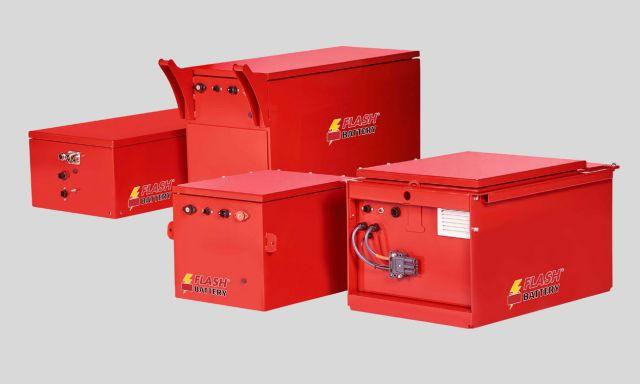
In Flash Battery, for example, lithium batteries are shipped under the code UN3480.
Class 9 – UN3481 – Lithium ion batteries contained in or packed with the equipment, but not attached to the source.
Conversely, batteries contained within equipment, and which arrive at their destination already installed in the equipment or device for which they were designed, are classified with the above code.
This classification applies both to lithium batteries packed together with the equipment or device for which they are designed, but not directly installed or connected, and to batteries already installed and connected to the instruments that will use them.
Additional battery requirements to be communicated to carriers
Once the type of classification to which the specific lithium battery belongs has been precisely identified (UN3480 or UN3481 – not forgetting that the correct classification can also be easily found via the Material Safety Data Sheet – MSDS), it is also necessary to provide further information for which there may be specific requirements: battery weight, size, capacity and state.

The “state of the battery” item is of paramount importance in order to be certain that you have used the correct packaging and do not receive complaints from transporters.
Battery states can be subdivided into the following cases:
- New batteries
- Defective or non-working batteries (not damaged)
- Batteries for disposal or recycling
- Seriously damaged batteries (as a result of an accident or test)
- Prototype batteries or small production batches of less than 100 pieces
In the case of batteries that are declared damaged, special packaging may be required by transport authorities to ensure the safety and protection of those transporting them.
Exemptions and Penalties
Not all companies are required to appoint an ADR Advisor. Specific exemptions apply:
-
Limited Quantities (LQ) and Excepted Quantities (EQ) – for companies handling exclusively goods packaged according to ADR Chapters 3.4 or 3.5;
-
Occasional Shipments – non-primary and sporadic activities, subject to strict limits:
-
Packaged goods: a maximum of 24 operations per year and 3 per month;
-
Tank/bulk goods: a maximum of 12 operations per year and 1 per month, with a total limit of 50 tonnes/year;
-
-
Final Recipients – companies that receive and unload dangerous goods packages for their own use (e.g., workshops receiving batteries or paints), provided they do not carry out shipments.
Failure to appoint an ADR Advisor carries severe penalties under Legislative Decree 35/2010:
-
Failure to appoint – administrative fine from €6,000 to €36,000;
-
Failure to notify the appointment to the Motor Vehicle Authority – fine from €2,000 to €12,000.