



Custom Lithium Batteries for Heavy-Duty Aerospace Handling
15 July 2026
The design of custom lithium batteries for heavy-duty industrial handling requires an engineering approach capable of combining reliability, safety, and seamless integration with the machine.
In high-criticality heavy-duty industrial applications, the internal handling of oversized components such as fuselages, wing sections, and critical structures requires extremely high levels of precision, reliability, and operational continuity. In these contexts, even a few minutes of downtime can slow down production, increase operational costs, and compromise process continuity.
Electrification is not just a sustainable choice, but a strategic lever to improve operational efficiency, safety, and continuity of work cycles in mission-critical applications.
It is precisely within this scenario that the special project developed by Flash Battery for a major European OEM specialized in the design of custom vehicles for the handling of non-standard loads in the aerospace and heavy-duty sector takes place, in collaboration with Atech, a powertrain system integrator we have been working with since 2021.
A collaboration that led to the development of a multidirectional platform powered by a modular and redundant energy system based on custom lithium batteries.
Multidirectional platforms for the aerospace sector: why they require custom batteries
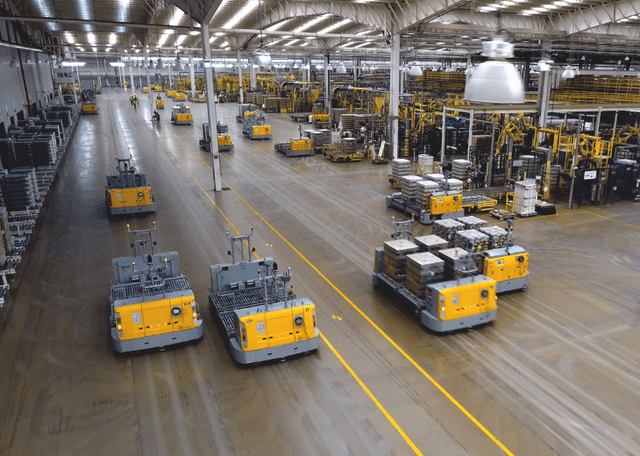
The application developed concerns a self-leveling multidirectional platform designed to operate within aerospace assembly lines dedicated to the handling of large structural components.
The machine was custom-designed to ensure:
• precise handling of very high-value loads
• integration into aerospace production flows
• high safety and reliability standards
• operational continuity during the most intensive work cycles
From the earliest project phases, Flash Battery supported the manufacturer in designing the energy system, with the aim of developing a solution capable of simultaneously supporting multiple drive axes, high power peaks, and continuous operating cycles.
Thanks to the vertical integration of the entire production process—from electronic design to firmware development, from module assembly to final testing—each battery is configured according to the OEM’s specific application requirements.
This custom engineering approach allows energy capacity, performance, and system reliability to be optimized, transforming the battery from a simple power component into a strategic element of the entire machine.

Self‑leveling multidirectional heavy‑duty platform for oversized aerospace component handling, powered by customised Flash Battery lithium batteries.
A modular and redundant battery system for mission-critical applications
One of the key requirements of the project was system redundancy.
In high-intensity industrial applications, machine downtime can slow down the entire production process and generate high costs. For this reason, Flash Battery developed a modular and redundant energy architecture designed to keep the platform operational even in the event of partial failure of one or more batteries, allowing reduced-power operation without interrupting the work cycle.
The solution developed by Flash Battery includes:
• 4 LFP lithium batteries connected in parallel, 47 kWh each
• total system energy of 188 kWh
• a modular architecture designed to ensure redundancy and operational continuity
The design of the battery system is not limited to defining energy capacity, but considers the entire machine architecture. The energy system is designed to integrate seamlessly with the vehicle and its specific application needs: moved masses, weight distribution, available space, motion logic, and safety requirements directly influence the solution development, enabling full integration between battery, vehicle, and powertrain.
The result is an energy platform designed to ensure high operational robustness and stable management of the most demanding working conditions.

Flash Battery custom lithium batteries with anti-corrosion protective treatment, developed for heavy-duty applications in aggressive operating environments
Co-engineering and joint development for heavy-duty applications
Given the complexity of the application, the project was developed through a co-engineering process involving the European manufacturer, the Flash Battery engineering team, and Atech, a German powertrain system integrator with whom we have been collaborating since 2021 to develop complete electrification solutions for the global market.
The joint work led to the creation of a multidisciplinary technical table, where each partner contributed specific expertise to define the most effective solution. The process was based on a deep analysis of application requirements and successive design proposals aimed at identifying the optimal solution.
This custom engineering model represents the distinctive value of the collaboration: developing solutions designed around the real application, operational constraints, and specific requirements, rather than adapting the machine to a standard solution.
Main challenges addressed during the project included:
• in-house development of the Master Controller and its control logic
• firmware management for multiple batteries and chargers
• layout optimization in confined spaces
• definition of protective treatments for complex operating environments

Co-design session dedicated to the development of an energy system for heavy-duty industrial applications