



Electrifying the agricultural sector: the silent revolution transforming farm work
12 May 2026

Agriculture is one of the sectors that more than others lives by long cycles, consolidated habits, and time-tested solutions. Yet, it is precisely here that one of the most profound technological transformations of recent years is taking shape.
It is not a loud revolution, nor an immediately visible one. It does not impose itself through replacement, but through evolution.
“It is a silent revolution, made of lighter machines, intelligent systems, autonomous robots, and batteries that are no longer just a ‘tank’, but the digital heart of a complex system.
Alongside large conventional machines, which will continue to play a fundamental role in modern agriculture, a new way of designing and using agricultural technology is growing: more precise, more connected, more data-driven. And it is precisely in this space that electrification is proving its real value.
For Flash Battery, the agricultural sector represents one of the most stimulating areas of this transformation: a complex operational context where reliability, adaptability, and analytical capability make the difference every day in the field.”

Electrification in the agricultural sector is not happening uniformly, nor according to a logic of immediate replacement of existing technologies. On the contrary, it is developing through a gradual process, driven by applications in which electric solutions are already able to generate tangible operational value today.
It is especially contexts characterized by repetitive work cycles, compact geometries, and highly specialized uses that represent the ideal ground for this transition. In these conditions, machine design can be rethought more efficiently, leveraging the characteristics of lithium batteries not as a constraint, but as a design enabler.
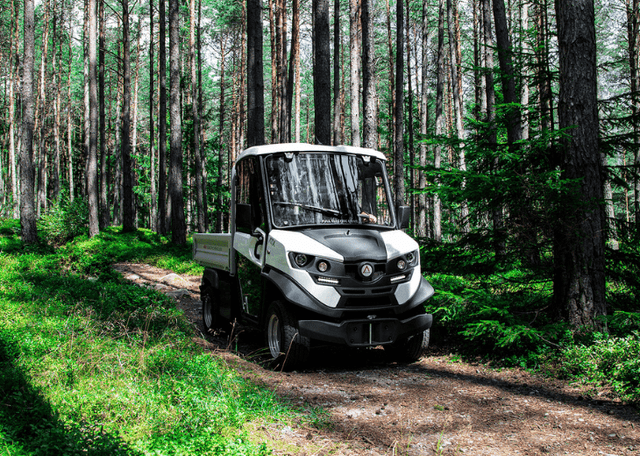
This is the case for electric agricultural robots used in row crops, as well as compact vehicles used in greenhouses and livestock farms. These machines do not simply perform a task; they collect data, learn from operating conditions, and progressively improve their performance.
In these scenarios, electrification represents a concrete answer to well-defined needs:
• greater precision in operations
• reduction of operating costs in the medium term
• integration with digital systems and data analytics platforms
• possibility to enable automation and autonomous driving
It is from these targeted applications that a broader transformation of the entire agricultural sector is being built step by step.

Electric agricultural machines at work: data, precision, and autonomy for more sustainable farming
Lithium batteries for agricultural machines: the heart of electrification
Within this evolution, the role of the battery has changed radically. It is no longer a component to be integrated at the end of the design process, but a central element around which the entire machine architecture is built.
Next-generation lithium batteries for agricultural machinery do not simply provide energy. They are complex systems capable of communicating, collecting data, and supporting increasingly advanced predictive logic. Today, the real difference lies not only in chemistry or capacity, but in the ability to design fully customised energy systems, capable of adapting to specific application needs. In this sense, choosing the right technological partner means turning the battery into a strategic ally that directly impacts machine performance and reliability.
Thanks to remote monitoring systems, OEMs can track battery behavior throughout its entire lifecycle, analyzing field usage conditions, response to workloads, and performance evolution over time.
A new concept of reliability is emerging: no longer static, but dynamic, based on the ability to read and interpret data.

Incentives and regulations supporting the electric transition in Europe
Alongside technological development, the European regulatory framework is also accelerating the transition toward more sustainable solutions. The European Battery Regulation introduces increasingly stringent requirements in terms of safety, traceability, and environmental impact, helping define a clear framework for all stakeholders involved.
This is not only about regulations or climate targets: across Europe, concrete investment programs are taking shape that make electric solutions increasingly accessible. Incentives for purchasing clean-energy-powered machinery, grants for precision agriculture, investments in infrastructure, and strengthening rural power grids are creating fertile ground for the adoption of electric technologies.
Each country follows its own path. Italy supports agricultural innovation through dedicated funding programs; the Netherlands continues to stand out for advanced environmental policies; in Germany, many regions promote tenders focused on sustainable technologies. Together, these initiatives are creating a favorable ecosystem for innovation, where electrification can develop in a structured and sustainable way.

Increasingly green European roads: incentives and investments are driving electric mobility