


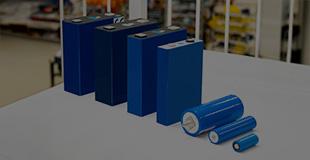



New chemistries for the future of lithium batteries: Flash Battery research
15 December 2025

In the industrial electrification sector, research and innovation are strategic drivers that can help shape how the market evolves. Founded in 2012, sparked by an innovative idea and two friends’ passion for electronics, in just a few years Flash Battery has become a benchmark in Europe for lithium batteries for industrial machines and vehicles. A strength that lies in the company’s ability to provide tailor-made electrification, featuring exclusive proprietary technology, developed by an R&D department that tests and experiments with new solutions every day.
We have always focused on LFP chemistry (Lithium-Iron-Phosphate), which stands out in the industrial machine market due to its intrinsic characteristics of high safety levels and stability. The latest generation of cells boasts increased energy density, capable of reaching 190Wh/kg. But we’ll never stop exploring! We test new chemistries and materials every day in our R&D laboratory, with the aim of providing manufacturers with increasingly high-performance lithium batteries that can meet the specific needs of a wide range of industrial applications.

LFP chemistry remains the number one choice for industrial applications due to its intrinsic safety and thermal stability
As manufacturers of custom lithium batteries, we are well aware that every industrial sector has unique needs: there are those that require a high number of daily cycles, those that work under extreme weather conditions or those that have significant restrictions in terms of on-board space and weight.
To effectively respond to the specific needs of each application, for some niche applications, we have chosen to complement our main chemistry, LFP chemistry, with other chemistries which, in certain contexts, can offer targeted benefits in terms of power, life cycles or energy density, thereby optimising vehicle or machine performance.

Spider chart comparison of LFP, LTO and NMC showing differences in safety, life span, specific energy, cost and C-rate
LTO chemistry: Exceptionally high cycle life and high power for intensive-use applications

LTO chemistry (Lithium Titanate Oxide) is a game changer for applications requiring high performance in terms of power and life span. Lithium batteries with LTO chemistry stand out for their higher specific power and C-rate, properties that enable greater power to be delivered for the same capacity and significantly faster charging and discharging processes.
The most revolutionary aspect of LTO technology is its extremely long cycle life, which can reach up to 20,000 cycles. To put this into perspective, in applications such as electric vehicles - typically charged no more than once a day - the use of a lithium battery with LTO chemistry could be excessive, as its service life could be much longer than that of the vehicle itself.
Another important benefit of LTO chemistry is the thermal tolerance: LTO cells function correctly in a wider range of temperatures than other chemistries, making them ideal for use in critical environments. Added to this is an extremely high intrinsic safety level, as can be seen from the abuse tests shown in the following video:
However, LTO technology also has some disadvantages, limiting its application. The energy density is notably lower than LFP chemistry, reaching almost half the capacity in terms of volume and weight. Moreover, the very high cost is a factor that requires careful consideration as part of the financial assessment of an electrification project using this chemistry.
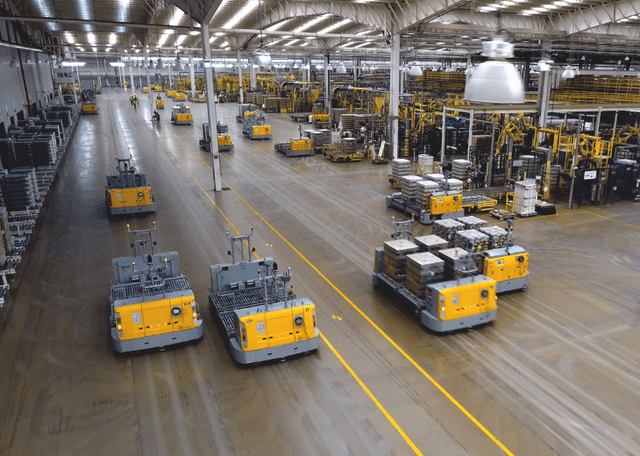
Indeed, at the moment, Flash Battery uses LTO chemistry batteries exclusively in specific cyclic applications, such as LGVs in automated logistics that require a high number of daily cycles and where the distinctive characteristics of this technology can reach their full potential.
Other potentially interesting sectors for the future include the marine sector, with specific reference to short-haul ferries and hybrid systems in applications equipped with an internal combustion generator combined with battery. In a hybrid system, the battery is used to meet peak power demands or to allow the temporary switching off of the combustion engine. In a power generator with an internal combustion engine and battery, the system may require the engine to start and supply power, partially charging the battery, then switch off and leave the battery to operate, thereby generating multiple daily cycles.
Applications such as mining vehicles or earth-moving vehicles are another area of interest, characterised by very intensive daily work cycles with continuous work shifts. Often, to enable continuity of work, ultra-rapid charging is used, or battery swaps.
The applications that benefit most from this chemistry therefore form a specialised niche: intensive-use applications without specific long-autonomy requirements but with demanding work cycles, or hybrid systems.
NMC chemistry: High energy density for applications with weight and space constraints

NMC chemistry (Nickel-Manganese-Cobalt) is a technology that we have never strategically focused on, given that it is much less stable and safe than LFP chemistry and therefore less suitable for the industrial machine and vehicle sector.
However, given its high energy density, we have chosen to use it exclusively for applications where there are significant weight and space constraints and where energy density is a critical requirement. Reaching 240Wh/kg, NMC chemistry has a very high specific energy, a property that allows it to store considerable quantities of energy in contained volumes and weights.
Theoretically, all vehicles and machines that require significant autonomy would benefit from the greater energy density offered by NMC chemistry. However, because of the more frequent safety issues, the higher price and the presence of cobalt (material with a high environmental impact), its use is not recommended unless it is considered indispensable. Preference should be given to LFP chemistry which, in its latest generations, has notably increased energy density, reaching 190Wh/kg.
At Flash Battery, we have therefore chosen to use NMC chemistry only where certain characteristics are essential, and we do so by limiting capacity. In fact, while for LFP chemistry batteries we have capacities of up to 600Ah per single cell, in applications where we use NMC chemistry, we prefer to contain the safety risk, opting for individually smaller cells. In addition, if an NMC chemistry battery is used, to keep the battery safe, it is important to integrate external safety solutions, which make the system more complex and expensive than an LFP chemistry system, as well as safer and inherently more stable.
In an industrial context, NMC chemistry is not particularly recommended, in part due to the limited number of life cycles. In fact, a battery with NMC chemistry offers, on average, 2,000 charge cycles: considering that many industrial machines operate with one charge cycle a day, this would mean an operational life of around 5-6 years. This would be considered insufficient for most industrial applications, which require long-term investments.
In our R&D department, innovation never stops. While, on the one hand, we are working every day on optimising the chemistries that we already use in our lithium batteries, on the other hand, we carry out continuous monitoring and testing of new, emerging technologies that could represent a turning point for the future of industrial electrification.
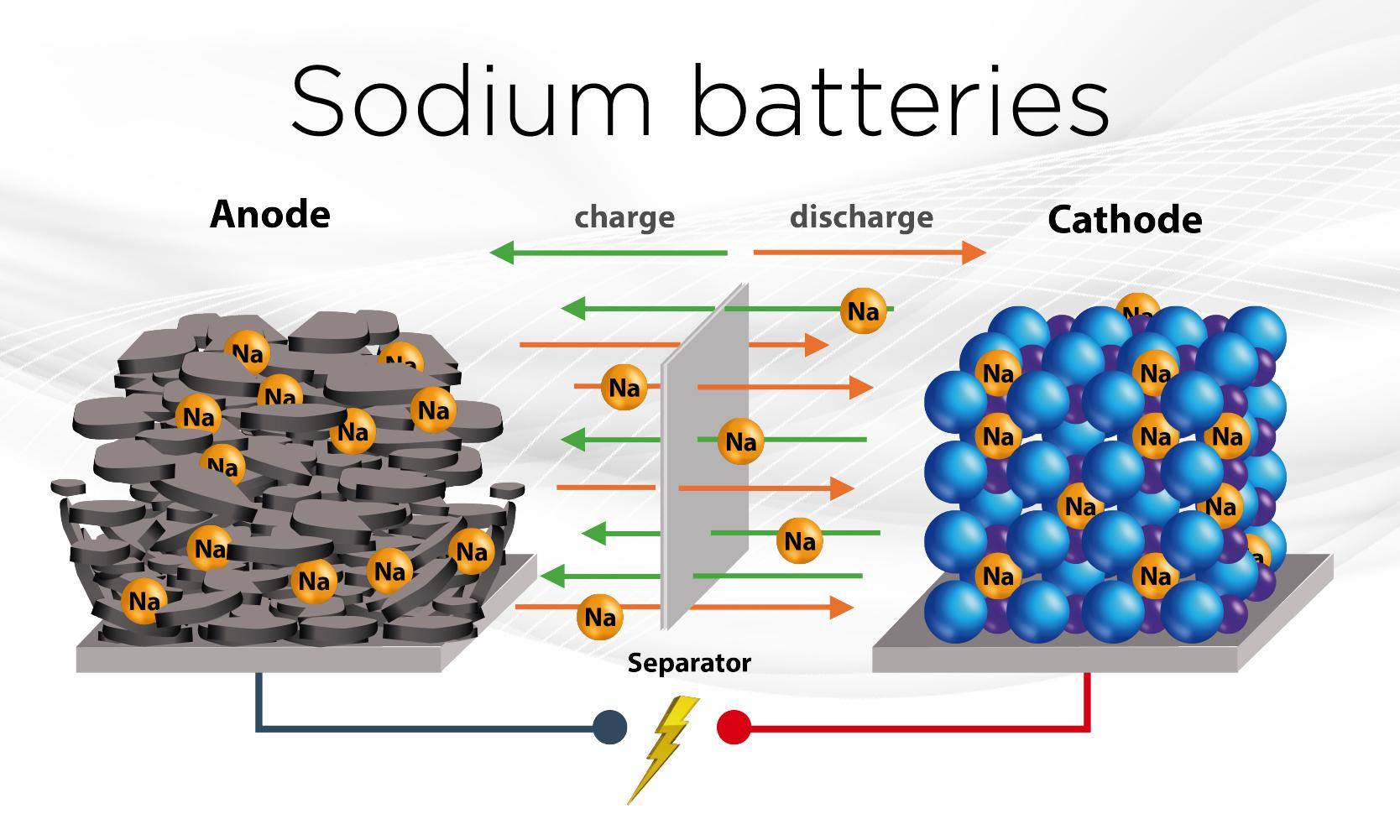
Not all chemistries available today on the market are ready for safe and reliable use in the industrial sector, but some show very interesting potential. For this reason, we have initiated a series of tests on emerging technologies, such as sodium batteries, semi-solid state cells and LMFP chemistry, to assess their true performance and understand if, how and when they can be integrated into our custom battery solutions.
Sodium batteries: Putting sustainability and safety first

On the surface, sodium batteries appear to be a promising alternative for the future, thanks to the widespread availability of sodium in nature, to the sustainability of the materials used and the potential for high safety levels. Our R&D team is therefore conducting a series of detailed tests to assess their performance in real contexts.
Among the main advantages of sodium batteries are the absence of cobalt, the good thermal tolerance and relatively low cost. However, energy density is still very low, limiting their adoption in industrial vehicles and machines, and making them more suitable for stationary applications such as energy storage.
One of the most challenging technical problems, however, relates to the large variation in voltage between the charge and discharge states. For vehicles or systems using these batteries, it is necessary to operate with voltages that can vary considerably: this results in a loss of power when the battery is nearly fully discharged, or requires oversized electronics to work at full power across the operating range.
This issue of voltage variations is intrinsic to the technology: when the voltage is halved, maintaining the same power requires operating with double the current.
Semi-solid state batteries: Greater safety and performance

If the arrival of the long-awaited solid-state batteries on the market still seems a distant prospect, semi-solid state batteries represent a promising technical development in both LFP and NMC chemistry. In these types of cells, the liquid electrolyte is partially substituted by a solid-state or gel electrolyte, which should considerably reduce the risk of combustion, maximising the overall safety level.
The Flash Battery R&D department has been testing this new technology for some time, as it has the potential to further improve battery safety, even though this improvement has yet to be fully demonstrated.
At the moment, the aim is to conduct specific tests to assess how the semi-solid state cells would behave under actual operating conditions, to see if the theoretical benefits can be translated into practical advantages for industrial applications.
LMFP chemistry: All the safety of LFP chemistry with greater energy density

LMFP chemistry (Lithium-Manganese-Iron-Phosphate) can be considered a true evolution of LFP chemistry.
Indeed, iron is partially substituted by manganese, which can potentially increase the cell voltage and consequently its energy density by up to 20% compared with LFP chemistry batteries, while maintaining similar properties in terms of safety and life cycles.
Recent studies in the field of LMFP chemistry show very promising results: LMFP cells could, in fact, have the potential to bridge the gap between LFP and NMC chemistries, offering high performance and high safety levels at the same time. The laboratory tests we are conducting are focused on verifying effectiveness in an industrial setting, with the aim of understanding whether this development can truly represent the next natural step in improving the performance of lithium batteries, without having to compromise on safety and life span.
If the test results confirm expectations, we could soon find ourselves with a chemistry capable of combining the structural benefits of LFP with a higher energy density, opening up new design possibilities for the electrification of sectors that still require various compromises today.

LMFP and LFP voltage curves: the higher voltage of LMFP shows the potential increase in energy density [1]
As we’ve seen, Flash Battery’s research and development is not limited to the implementation of existing technologies, but embraces a pioneering vision of industrial electrification. From LFP, LTO and NMC chemistries, already used in our lithium batteries based on the requirements of individual applications, to studies of emerging technologies such as LMFP chemistry, sodium batteries and semi-solid state cells, every development represents a targeted response to the increasingly diverse needs of the industrial market.

The Flash Battery R&D laboratory, where testing and validations guide the development of custom lithium batteries
This multi-technology approach reflects Flash Battery’s philosophy: there’s no such thing as a universal solution, but rather the need to develop a lithium battery that is most suitable for each specific application. Our customisation capability, supported by an R&D department constantly looking towards the future, allows us to carve out a prominent place among European leaders in industrial electrification, offering lithium batteries for industrial machines and vehicles that look ahead today to the needs of tomorrow’s market.
Bibliography
[1] https://www.researchgate.net/figure/Typical-voltage-profiles-of-NCA-LFP-LMFP-and-LiVOPO-4-cathodes-obtained-from_fig18_295909599